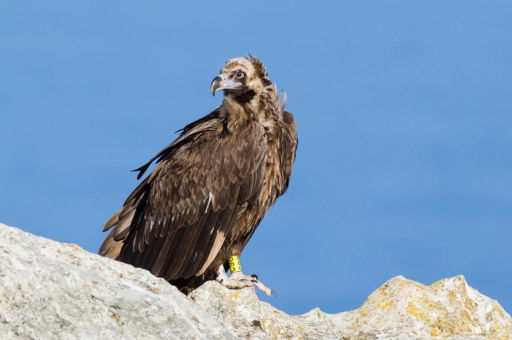
The Ministry of Agriculture, Fisheries and Natural Environment of the Balearic Islands Government has intensified its annual monitoring of large raptor species as the breeding season reaches a critical phase. Through the Directorate General of Natural Environment and Forest Management, and with the involvement of Environmental Agents and the Species Protection Service, comprehensive conservation measures have been implemented to safeguard these protected and ecologically significant birds.
Fieldwork included systematic inspections of nesting territories by land and sea, supported by boats and high-powered optical equipment. The campaign assessed territory occupation, egg laying, hatching success, and overall productivity. In Menorca, additional institutional collaboration supported monitoring efforts for key species.
TDB keeps you informed. Follow us on: Facebook, Twitter and Instagram
Balearic Islands Government Strengthens Monitoring of Large Birds of Prey During Breeding Season
As apex predators with limited populations in an insular environment, large raptors are particularly vulnerable to external pressures. Continuous demographic and distribution data collection is essential to evaluate long-term trends and guide adaptive conservation strategies.
The osprey population showed varied outcomes across islands. Mallorca recorded 11 territorial pairs and 11 fledglings, although productivity remains moderate. In Cabrera National Park, five pairs were identified, producing four fledglings, and one rescue intervention was conducted following nest abandonment. Ibiza reported an improvement, with three successful breeding pairs and four fledglings. In Menorca, four pairs initiated breeding and three successfully fledged six chicks.
The red kite population remains stable overall. In Mallorca, 52 occupied nests were documented with at least 62 fledglings, while Menorca recorded 68 territorial pairs, albeit with lower productivity than the previous year. Juvenile birds have also contributed to reinforcement initiatives beyond the archipelago.
Mallorca continues to host the breeding populations of both the black vulture and the griffon vulture. The black vulture registered 54 occupied nests with egg laying, resulting in 35 fledglings after accounting for losses. The griffon vulture recorded 42 breeding pairs and 38 fledglings. The Bonelli’s eagle population included 14 territorial pairs, with eight successful nests and at least 13 fledglings.
Public Awareness and Protection Measures
Authorities emphasise that breeding periods are highly sensitive. The red kite breeds from February to June; the osprey and Bonelli’s eagle from February to July; and both vulture species from December to August. Disturbances such as unauthorised access to restricted areas, climbing activities, or noise from land or sea can lead to nest abandonment and breeding failure.
Compliance with access restrictions and environmental regulations is essential to protect these emblematic species and preserve the natural ecosystems of the Balearic Islands.
Plan Terrasse and Satellite Tracking
Under the Integrated Conservation Plan for Diurnal Raptors (Plan Terrasse), several red kite chicks have been fitted with GPS/GSM satellite transmitters to monitor movements and detect threats such as illegal shooting, poisoning, electrocution, or collisions with power lines. Osprey, black vulture, and griffon vulture individuals have also been tagged to study juvenile dispersal, survival rates, and spatial behaviour.
Through these coordinated efforts, the Balearic Islands Government reinforces its commitment to biodiversity protection, wildlife conservation, and sustainable environmental management across the archipelago.