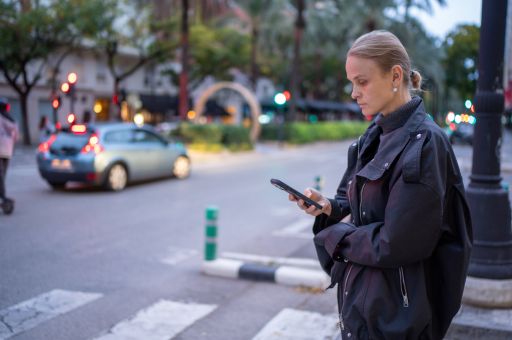
Pedestrian safety in urban environments has become a central priority within public mobility policies. In this context, mobile phone use and impatience when crossing the roadway are identified as two of the main risk factors associated with pedestrian accidents at crosswalks, particularly in cities.
Authorities responsible for road safety emphasise that discussions on safe mobility should not focus solely on statistics, but on the fundamental right of citizens to walk without fear of being involved in a traffic incident. Walking is an essential part of everyday life and must take place in public spaces that are safe, accessible, and designed with people in mind.
TDB keeps you informed. Follow us on: Facebook, Twitter and Instagram
Mobile phone use and impatience: key risk factors for pedestrian safety in urban crossings
Recent analyses of urban traffic incidents show that pedestrians remain one of the most vulnerable groups. Older adults, in particular, account for the highest proportion of fatalities in pedestrian accidents, highlighting the urgent need for urban environments adapted to an ageing population. While women experience a higher number of pedestrian accidents, these are generally less severe, and a considerable share of fatal incidents occurs without any violation on the part of the pedestrian.
The behaviour of the so-called “digital pedestrian” has emerged as a decisive factor in urban road safety. A significant number of people admit that they do not pay adequate attention when crossing marked crosswalks, despite being aware of the risks linked to mobile phone use. Activities such as making phone calls or reading messages while walking have become commonplace, even at signal-controlled crossings, increasing exposure to danger.
In addition to distraction, impatience and overfamiliarity with the surroundings play a major role in rule-breaking behavior. Crossing against a red light or outside designated pedestrian crossings is frequently associated with a false sense of control. Although crosswalks are generally perceived as safe, many pedestrians believe that improvements are needed, particularly in terms of visibility and clear zones before and after crossings.
In response, there is a growing need to move towards an urban mobility model that places people at the center. Measures such as reduced speed limits, expanded pedestrian areas, traffic calming strategies, and compact city planning—where essential services are within walking distance—are key to improving safety. Public support is also strong for awareness campaigns and corrective measures addressing mobile phone use while crossing streets.
Achieving safe urban mobility requires coordinated action between public authorities, local governments, and citizens, with a clear focus on protecting the most vulnerable users. Ensuring that everyday walking routes are safe is not only a matter of infrastructure, but also of civic culture and shared responsibility.