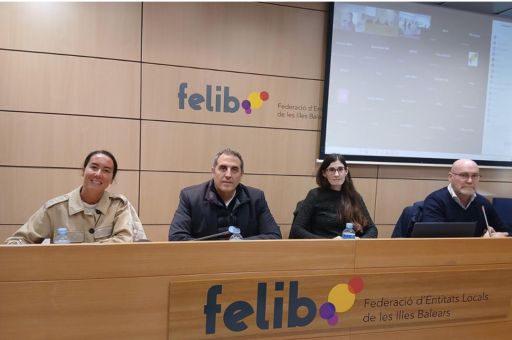
The Directorate General for Emergencies and Interior Affairs has held a technical training session focused on the new SISTRA2 platform, a digital tool designed to streamline administrative procedures related to emergency management, including the submission of self-protection plans (PAU). The event took place at the headquarters of the Federation of Local Entities of the Balearic Islands (FELIB) and brought together technicians from local councils, public administrations and private companies across the islands.
The session was delivered by the Head of the Planning Service, Pedro Orfila, together with technical staff from the Directorate General for Emergencies and Interior Affairs. The platform was presented as a key instrument for improving administrative efficiency, facilitating the work of applicants and strengthening public safety management.
TDB keeps you informed. Follow us on: Facebook, Twitter and Instagram
Administrative simplification for self-protection plans promoted through the SISTRA2 platform
SISTRA2 has been operational since 1 January and represents a significant step in the process of administrative simplification within the field of emergency planning. After an initial testing period to ensure proper functionality, comprehensive information and training have been provided to all professionals involved to enable effective use of the system. Around fifty technicians took part in the session, which was available both in person and online.
Self-protection plans are mandatory for activities involving public attendance, whether permanent or temporary, and must be submitted by the activity operators. Temporary activities, such as concerts, local festivals or fairs, are often organised directly by local councils, which explains the choice of FELIB as the venue for the training. Permanent activities are usually promoted by private entities and take place in fixed facilities over extended periods.
The introduction of SISTRA2 makes it possible to speed up the processing and registration of self-protection plans while enhancing operational readiness in emergency situations. The system strengthens safety measures not only for workers and users, but also improves the overall response capacity of public services when emergencies occur.